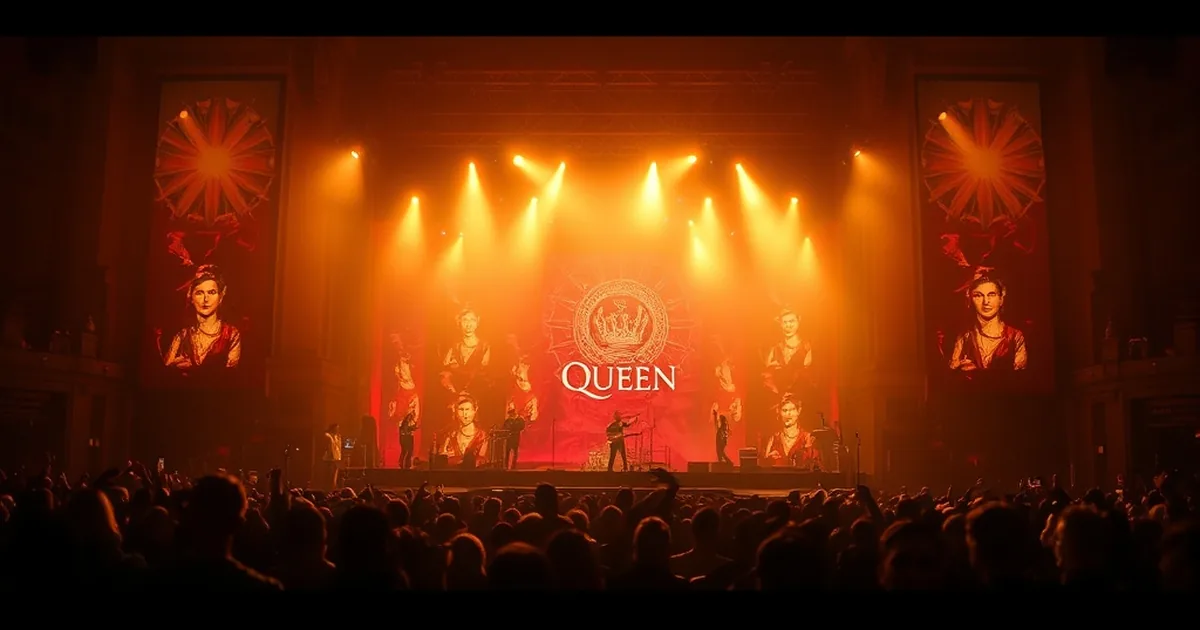
Queen Concerts: Experience Rock Classics Live
You know the stomp. Bum, bum, clap. Before the first line of "We Will Rock You" even arrives, an entire stadium knows exactly what to do. That is precisely where the fascination begins when someone searches for Queen concerts: it is rarely just about a date, but about a feeling that older and younger fans recognise instantly. And the surprising part: Queen was not originally Freddie Mercury's band at all, but grew out of the ambition of a guitarist who had built his own instrument as a teenager together with his father. That homemade sound shapes every concert that carries the Queen name to this day.
This article sorts out what the term Queen concerts actually means right now, why this music works so well live, and how to get real tickets instead of overpaying at dubious resellers.
Queen concerts today: the formats that actually exist
First, the most important thing: there is no longer one single Queen concert. Behind the term Queen concerts today lie three very different live formats, and it is worth knowing which one you are looking at before you buy.
The original line-up no longer exists. Freddie Mercury died in 1991, but Brian May and Roger Taylor, two of the four founding members, still take the stage today, though under the name Queen + Adam Lambert. May and Taylor first performed with Lambert in 2011 at the MTV Europe Music Awards, and the first full concert in this configuration followed a year later. Lambert himself describes his role in refreshingly straightforward terms: he sees himself as someone who sings the songs as a tribute, not as a Mercury double.
A second category fills the concert calendars: tribute shows. These include classic cover bands putting on a full rock programme, as well as symphonic evenings with an orchestra. And thirdly, there are the now very popular candlelight concerts, where a string quartet performs the hits over roughly an hour. Anyone looking for tickets should therefore first answer a simple question: do I want to see May and Taylor live, or is it about the music in a new setting? Both fall under the heading of Queen concerts, but they feel fundamentally different.
How a student band became a stadium machine
In brief: Queen was not a product of chance, but emerged from the ambition of musicians who refused to do anything by halves. You can hear that in every live arrangement to this day.
Queen was founded in London in 1970, with Freddie Mercury on vocals and piano, Brian May on guitar, and Roger Taylor on drums, with John Deacon joining later on bass. The often-forgotten beginning: May and Taylor had previously played together in the band Smile, Mercury was a fan of that band and pushed the two towards more elaborate stage and recording ideas. When he joined in 1970, it was Mercury who suggested the short, one-word name "Queen" - a name that hinted at his androgynous side and at royal ambitions.
The technical backbone came from Brian May. As early as 1963, as a teenager, he built his own guitar together with his father: the legendary Red Special. That unmistakable sound is why May's layered guitar walls at concerts are just as recognisable as Mercury's voice. Deacon joined in early 1971, and the self-titled debut album appeared in 1973.
The artistic breakthrough was marked by an album that broke every boundary. "A Night at the Opera" from 1975 brought international success and was considered at the time the most expensive album ever produced, recorded across multiple studios. That very love of excess, of multi-part harmonies and the theatrical, is the reason the songs are so rewarding live today. They were built for large spaces long before the stadiums existed that would later fill up for them.
The man who conducted a stadium
What this is about: Queen concerts became immortal less through any single song than through the way Mercury led an audience. That blueprint shapes every good show to this day.
Mercury is considered one of the greatest singers in rock history, known for his extravagant stage presence and a vocal range of around four octaves. His most famous tool was not a note but a technique: the call-and-response with the audience. What began as a spontaneous shout at a concert in Montreal in 1978 - the famous "Ay-Oh" - became the trademark of his greatest performances.
The most famous moment came at the Live Aid concert on 13 July 1985 at Wembley Stadium in London. In just under 21 minutes, the band played a dense medley of their biggest songs, from "Bohemian Rhapsody" through "Radio Ga Ga" to "We Are the Champions". In the middle of it, Mercury sang a single, sustained note to the audience, and tens of thousands sang it back. That one note went down in pop history as "the note heard round the world". The appeal lay not in technical brilliance alone, but in the fact that an entire stadium sounded, for one moment, like a single choir. The performance was voted the greatest rock gig of all time in 2005 and forms the emotional centrepiece of the 2018 film "Bohemian Rhapsody".
The last concert of the original line-up was also a record. On 9 August 1986, Queen played at Knebworth Park in Hertfordshire in front of more than 120,000 people, and Mercury commanded that enormous crowd with the same tools he used on an audience a tenth of the size. Anyone who attends a well-made show today is experiencing, at its core, an attempt to bring that feeling into the present.
After Freddie: from Paul Rodgers to Adam Lambert
In brief: Queen did not stop after 1991, but reinvented its live existence several times over. That is why concerts under this name exist at all today.
First came the pause. "Made In Heaven", released in November 1995, was built from recordings that Freddie had left the band knowing he would not be able to finish the songs himself. But the most emotional moment had already come in 1992 with the Freddie Mercury Tribute Concert: in front of 72,000 spectators at Wembley Stadium and more than a billion people watching on screens, the band honoured their singer publicly for the first time.
The return to touring came years later and with a different voice. Between 2005 and 2006, May and Taylor toured the world as Queen + Paul Rodgers - the first full live performances since the last tour with Mercury in 1986. This led to the 2008 studio album "The Cosmos Rocks".
Today's frontman found his way through television. Adam Lambert, a singer from San Diego, sang "Bohemian Rhapsody" at his audition for the eighth season of "American Idol" and finished in second place in 2009 on the strength of his voice and stage presence. Since then he has been the band's permanent voice. The scale of the mission is reflected in the sheer size of the catalogue: over 100 million records sold worldwide, along with a long string of number-one albums and singles.
Tribute, symphonic and candlelight: Queen without Queen
What this is about: most live dates listed under Queen concerts today are not performances by the real band, but tributes by other musicians. Done well, they are a worthwhile experience in their own right, not a substitute.
The cover band version comes closest to the arena show: full sound, often with a singer who captures Mercury's gestures and vocal range, plus the typical sing-along passages. Symphonic programmes move the hits into the orchestra and emphasise the operatic quality that is already present in songs like "Bohemian Rhapsody".
The fastest-growing format is the third one: candlelight concerts. Here a string quartet typically plays for around 60 to 65 minutes in a room lit by hundreds of candles, often in churches or historic halls. The typical programme ranges from "We Will Rock You" and "Radio Ga Ga" to "Bohemian Rhapsody" and "Don't Stop Me Now". The ballads in particular work surprisingly well in this setting: "Love of My Life" was in the original already a delicate piece for voice and harp or guitar, and the four strings take on exactly that role without anything feeling missing. Anyone attending should know, however, that this is about atmosphere and not about stomping. Tickets for these series are usually sold exclusively through the respective promoter, often through the Fever platform.
Tickets and practical tips for Queen concerts
In brief: the most common mistake is buying the first offer you come across. Clarifying a few things in advance saves money and frustration.
Before you pay, answer three questions. First, what format is it: Queen + Adam Lambert in an arena, a tribute band in a club, an orchestral evening, or a string programme by candlelight? Second, does the title actually carry the official band name, or does "Queen" only appear as a reference to the repertoire being played? Third, is this an official seller or a secondary-market dealer charging a markup?
For the real band, it is worth checking the official channels and established ticket outlets such as Eventim, Ticketmaster, or Live Nation, rather than ad-funded "fan guides" that often turn out to be resellers. Look for the correct spelling Queen + Adam Lambert. If you are after the music in a more intimate setting, tribute and string formats are usually cheaper and available in far more cities. Bear in mind that the song selection varies noticeably depending on the format: while an arena show almost always features the big anthems, the programme at candlelight and orchestral evenings varies and often includes quieter or less frequently played pieces.
The quickest overview of current live dates in Germany can be found in our Concerts hub and in the Events Calendar. Anyone who prefers to browse by name will find what they are looking for in the Artist Directory. A side note that causes more confusion than you might expect: do not mix up the band with the Australian metalcore group I Killed The Prom Queen, which despite the name has nothing to do with Freddie Mercury, but is also touring Germany in 2026.
Frequently asked questions about Queen concerts
Does the real band Queen still perform today?
Partly. The two founding members Brian May and Roger Taylor still take the stage, though under the name Queen + Adam Lambert. Bassist John Deacon withdrew completely from the music business after Mercury's death and no longer performs. A full reunion of the original line-up is therefore not possible.
Can Adam Lambert replace Freddie Mercury?
He explicitly does not want to, and that is precisely what makes the situation appealing. Lambert sees himself as a singer who carries the catalogue forward with respect, not as a copy. Anyone who goes in expecting a Mercury imitation will be disappointed. Anyone who wants to experience an honest celebration of the songs will find exactly that here.
What is the difference between a tribute show and a Queen concert?
An official Queen concert today means Queen + Adam Lambert with original members May and Taylor. Tribute shows are performed by other musicians, sometimes as a cover band, sometimes as an orchestral programme, sometimes as a string quartet by candlelight. Musically both can be excellent, but the stage, the price, and the atmosphere differ considerably.
Which songs can you expect to hear live?
The big anthems are almost never missing. Mercury wrote classics such as "Killer Queen", "Bohemian Rhapsody", "Somebody to Love", "We Are the Champions", and "Don't Stop Me Now", alongside sing-along numbers like "We Will Rock You" and "Another One Bites the Dust". Which ones are actually played depends on the format: candlelight and orchestral evenings set their own priorities and often include quieter pieces as well.
Why does Queen work so well live?
Because the songs were composed for large spaces from the very beginning. The multi-part choral arrangements, the layered guitars, and the audience call-and-response that Mercury perfected only come into their own when thousands of people are singing along. That is why the songs still fill entire arenas half a century after they were written.
Sources
- Wikipedia: Queen (band), Freddie Mercury and Queen's performance at Live Aid (band history, Knebworth 1986, vocal range, "note heard round the world")
- Wikipedia: Brian May (Red Special, Queen + Paul Rodgers, "The Cosmos Rocks")
- History.com and Billboard: background on the 1985 Live Aid performance and the setlist
- Smooth Radio and uDiscoverMusic: origin of the "Ay-Oh" in Montreal 1978 and its role at Live Aid
- Ticketmaster: Queen + Adam Lambert (Lambert's path via American Idol, shared history from 2011)
- Candlelight Concerts (Fever) and various string quartet promoters: format, duration and typical programme of candlelight tributes
The key takeaway: Queen concerts today are not a single event but a spectrum ranging from the big arena show to a string quartet by candlelight. Clarify the format before you buy and check the official sales channels, and you will end up with the right experience rather than a disappointment. And if you are simply in the mood for live music in general, a look at our Concerts Calendar is a good place to start, where new dates for Germany are added on an ongoing basis.