ARD Radiokulturnacht der Bücher 2026
hr-Sendesaal - Hessischer Rundfunk, Frankfurt, Germany
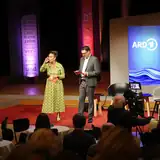
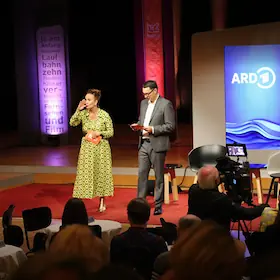
ARD Radiokulturnacht der Bücher featuring Dörte Hansen, Caroline Wahl, and Christoph Kramer
Moderators Catherine Mundt and Christoph Schröder welcome authors at the hr-Sendesaal who will shape the 2026 autumn book season. The event runs until approximately midnight, with the building (including the Goldhalle) opening at 6 p.m. Food and drinks are available in the Goldhalle.
Guests include:
- Dörte Hansen with "Broder" - about a farm, family rivalries, and our responsibility toward nature.
- Meron Mendel and Saba-Nur Cheema with "Die Empörungsfalle" - a manifesto for a new culture of debate.
- Sven Regener with "Frankie und Freddie" - two brothers on a comic and poetic journey through West Berlin in the early 1980s.
- Caroline Wahl tells in "1999 Meter über dem Meer" of a young woman between self-discovery, longing, and a fresh start.
- Jaroslav Rudiš combines in "Wo die Toten sprechen" a road trip, cemeteries, and friendship into an unconventional journey through Central Europe.
- Lukas Bärfuss addresses in "Königin der Nacht" themes of power, love, and human vulnerability.
- Ingo Schulze draws in "Das Wasser im August" a panorama of contemporary Germany between memory and new beginnings.
- Michaela Benthaus explores in "Zwischen Schwerkraft und Schwerelosigkeit" what holds people in place and what sets them in motion.
- World Cup-winning footballer Christoph Kramer embarks in "Wolkenberührpunkt" on a quest for dreams, uncertainties, and growing up.
- Natalie Amiri and Minu Barati present "Unsere Väter" - a book they co-wrote with Shila Behjat and Düzen Tekkal about the formative stories of their fathers.
- Justus Bender ventures in "Deutschland 2033" to examine the country's political future.
- Kinga Tóth moves in "Mariamachina" between literature, performance, and the art of language.
- Tülin Sezgin tells in "Almanci-Mädchen" how she came to embrace her German identity.
Lectures · Frankfurt 19 in the next 30 days →
 69lectureThu 12.11.Timon Krause 2026 - Die Lesetour - 99 Mind Hacks
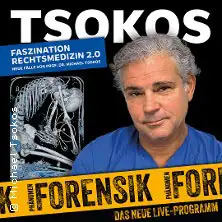 67lectureSat 20.3.Michael Tsokos | Phenomenon Forensics - Fascination with Forensic Medicine 2.0
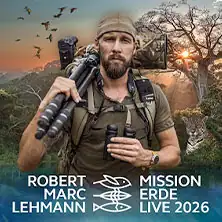 67lectureThu 25.3.Robert Marc Lehmann: Mission Erde Live - The World Is Worth Fighting For
 66lectureSat 13.3.Lars Eidinger - Brasch Poems
 64lectureSun 8.11.Robert Habeck - Arctic Meltdown
 64lectureSun 3.1.Wladimir Kaminer
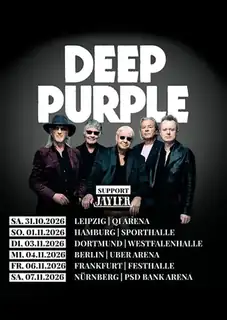 100concertFri 6.11.Deep Purple in Germany 2026
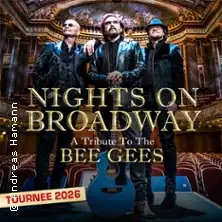 100concertSat 28.11.Nights on Broadway - A Tribute to the Bee Gees performed by Night Fever
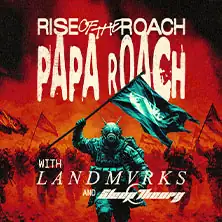 100concertThu 26.11.Papa Roach - Rise of the Roach
 99concertSat 7.11.Nico Santos - Arena-Tour 2026
 97concertTue 27.10.Little Big - European Tour 2026
 97concertFri 6.11.Blue - 25th Anniversary Tour