The Last Man. Where Is the World Heading?
Laeiszhalle, Hamburg, Germany
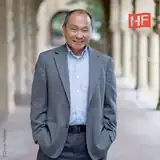
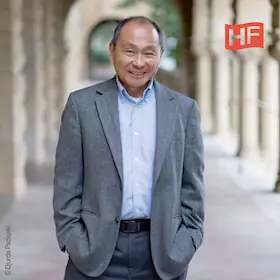
Moderated discussion in English and German (with translation)
In spring 1989, American theorist Francis Fukuyama became world-famous with a single formulation: he spoke of the "end of history" - capturing for many the greatest historical turning point since World War II. Now Fukuyama comes to Hamburg to address the burning questions of our time.
Did the collapse of the Soviet Union truly bring the hoped-for triumph of the Western liberal system - and with it the end of competing ideologies? How does Fukuyama assess his thesis in retrospect? How does he read our complex present, and how are the two turning points connected? His latest book "The Last Man. Where Is the World Heading?" (2026) deliberately echoes his famous title "The End of History and the Last Man" (1992). In it, Fukuyama argues why liberal thought offers no alternative for Western societies in the 21st century - and why we must fight for freedom if we are to contain the risk of an authoritarian world order.
Francis Fukuyama, born in 1952 in Chicago, studied political science at Harvard. His 1992 bestseller "The End of History" brought him international recognition. He taught at Johns Hopkins University, received the Skytte Prize in 2015, and is today a professor of political science at Stanford University. The New Yorker called him "a thinker of extraordinary significance".
Lectures · Hamburg 33 in the next 30 days →
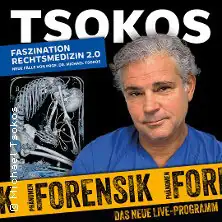 67lectureMon 7.12.Michael Tsokos | Phenomenon Forensics - Fascination with Forensic Medicine 2.0
 65lectureSun 22.11.Lydia Benecke - Criminal Psychology of Serial Murder
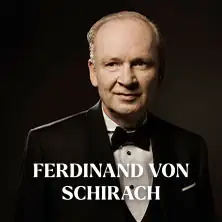 61lectureSun 20.12.Ferdinand von Schirach - The Silent Friend
 58lectureSun 8.11.Georg Elser Reading - Jens Harzer Reads the Interrogation Protocol
 57lectureTue 8.12.Psychologie to go! LIVE - with Franca Cerutti and Christian Weiss
 54lectureSat 31.10."Josse" - Children's Book Premiere
 100concertSun 1.11.Deep Purple - SPLAT! World Tour 2026
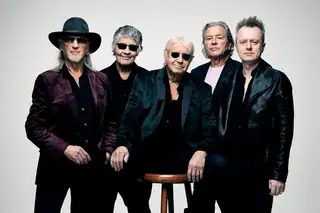 100concertSun 1.11.Deep Purple in Hamburg: MAD IN EUROPE
 100concertSun 29.11.Tori Kelly - God Must Really Love Me Europe Tour
 93musicalSun 7.3.BEAT IT! – The Hit Show About the King of Pop!
 100concertMon 26.10.Little Big - European Tour 2026
 99concertSat 12.12.INNA - Echoes Tour 2026