The Messiah
Municipal Theatre in Leszno, Poland

In 1942, shortly before his death, Bruno Schulz - a teacher from Drohobycz, prose writer and illustrator, author of "The Street of Crocodiles" and "Sanatorium Under the Sign of the Hourglass" - managed to smuggle a mysterious package of manuscripts out of the ghetto. Their fate after the war became the subject of a fascinating investigation and remains one of the greatest mysteries of Polish literature. All evidence suggests that a novel titled "The Messiah" was created at that time, but its trace was lost. We know only that its opening words read: "In the morning my mother woke me, saying: The Messiah is near. People have already seen him in Sambor..."
Almost 20 years later, a high school student named Jerzy Ficowski - who would become a poet and essayist - encountered Schulz's prose for the first time. He decided to write him a letter, but by the time he sent it, Schulz was probably already dead. On November 19, 1942, he was shot by a Gestapo officer in Drohobycz while returning with a loaf of bread from the Judenrat. Ficowski took on the role of archaeologist and chronicler of his life: from scattered fragments and scraps, he attempted to piece together a biography and reconstruct Schulz's world.
Małgorzata Sikorska-Miszczuk's play, presented in grotesque fashion, tells of the failed search for the manuscript by the Ministry of Culture during the Polish People's Republic, woven together with the biography of the creator of "The Messiah." The third thread of the performance concerns the "creative struggles" of the playwright herself, writing in contemporary times on commission from a director staging the play abroad.
Direction: Ewa Halatyn. Set design: Grzegorz Zych.
Cast: Adam Winkel, Maria Konczewicz, Maja Karmińska, Danka Sikorska, Grzegorz Zych, Patryk Waszyk, Maciej Wajs, Jagoda Walczak, Wojciech Stępień, Szymon Mojsak.
Events · Leszno 4 in the next 30 days →
43theaterSun 11.10.Separatka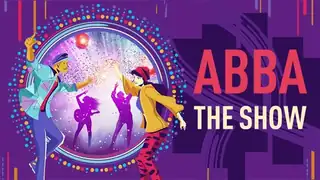 66concertThu 19.11.ABBA The Show - ABBA's Greatest Hits Live
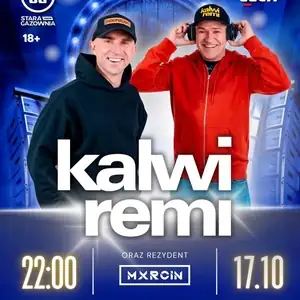 56concertSat 17.10.Kalwi & Remi
 56concertFri 27.11.Schlager Gala with Humor
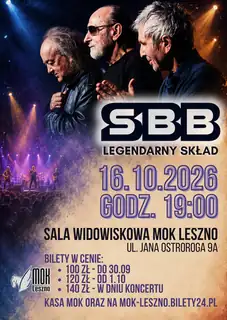 52concertFri 16.10.SBB (Skrzek / Anthimos / Piotrowski) || CONCERT
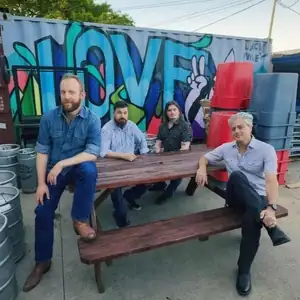 36concertSun 18.10.Dustin Arbuckle & The Damnations
 36concertThu 19.11.Crazy Scientists - Science Show for Kids
 36concertFri 20.11.World Music Gala – From Vienna to Rio de Janeiro
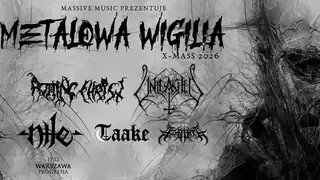 96festivalThu 17.12.Metalowa Wigilia 2026
 94festivalThu 5.11.XXV Wroclaw Industrial Festival
 94festivalFri 12.2.Wrocław
 93musicalMon 9.11.Mamma Mia 2