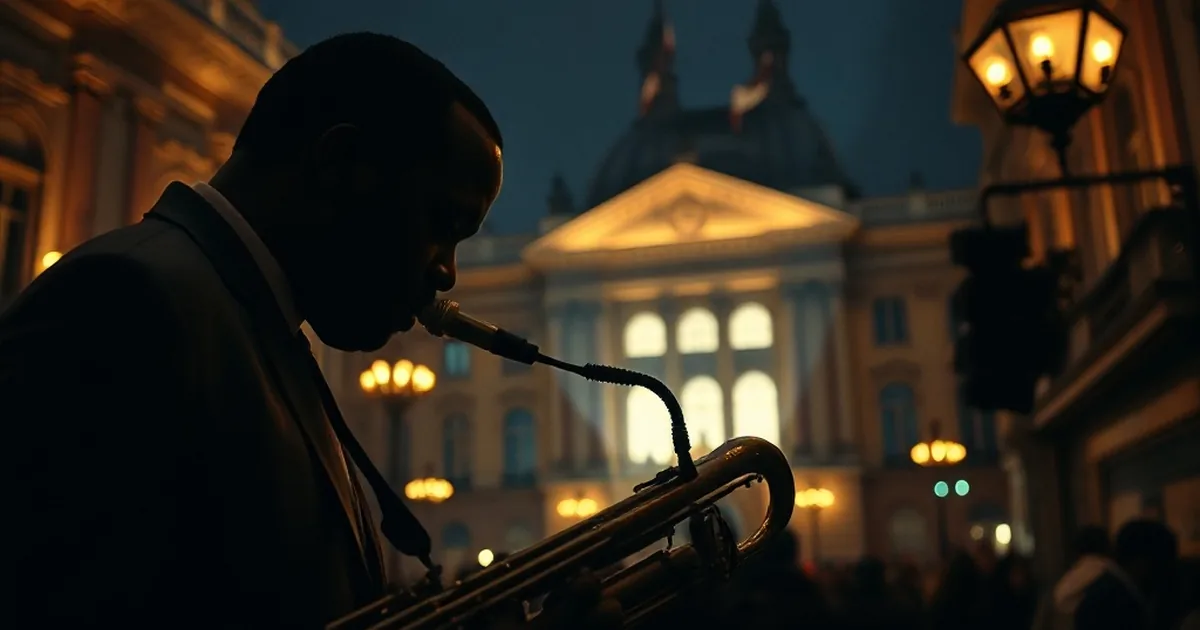
Miles Davis Vienna: the traces of a jazz legend in the city
You know that sound, even if you have never owned a jazz record. That muted trumpet hanging just behind the beat, dripping from café playlists, film scenes and series like Mad Men. That is Miles Davis. And here is the point that almost nobody has on their radar: anyone who googles Miles Davis Vienna today is usually not looking for an upcoming concert but stumbles across three decades of real city history. Davis performed in Vienna on several occasions, once so loud and distorted that purists fled the hall, and he also gave his very last concert on European soil here. Concerts in Vienna therefore have a direct line to one of the most important musicians of the 20th century.
Miles Davis Vienna: what really remains of the concerts
In short: Miles Davis Vienna refers above all to three moments. A legendary electric concert in 1973 at the Stadthalle, a comeback appearance at the Wiener Konzerthaus in the early 1980s, and his last concert in Europe in 1991, a few months before his death.
The connection between Davis and the city was never a one-off but ran through his late career. The Miles Davis Septet of the time toured Europe in autumn 1973 and stopped in Vienna on 3 November at the Wiener Stadthalle, for a concert of six pieces lasting just under 63 minutes. Almost a decade later he returned, for a concert at the Wiener Konzerthaus in the early 1980s, during his comeback tour around the album "The Man with the Horn". Before that came a long break: from 1975 until early 1980 he had withdrawn from the scene, physically and mentally worn down, and had barely touched his trumpet.
And the end of the story also takes place in Vienna. Davis gave his last concert in Europe in 1991 at the Austria Center in Vienna, shortly before his death. He died that same year; he had been born in 1926 in the US state of Illinois. The chapter of Miles Davis Vienna is therefore closed, but it reverberates, reaching into corners of popular culture where nobody would expect to find jazz.
The evening at the Stadthalle in 1973: Miles at the outer edge
In short: the Stadthalle concert of 1973 is regarded by many as the high point of Davis' electric phase. Anyone wondering why his name comes up among rock fans will find the answer here.
This was not cocktail jazz. The line-up of that period consisted of Dave Liebman on saxophone and flute, Reggie Lucas and Pete Cosey on guitars, Michael Henderson on bass, Al Foster on drums and James Mtume on percussion. The entire programme was broadcast by Austrian television. What makes this remarkable: Davis was far from healthy at the time. He was recovering from a car accident but refused to stop. In his autobiography he later explained that at 47 he did not belong in a rocking chair but wanted to keep trying interesting things.
How far-reaching this chapter was is illustrated by one detail about the bassist. Before Michael Henderson joined Davis, he had been touring with Stevie Wonder, and Miles is said to have told Wonder: "I'm takin' your fuckin' bass player." The fact that Davis was operating in such soundscapes at all was also connected to European avant-garde. The German composer Karlheinz Stockhausen, whom Davis named as a major musical influence, worked with sounds that suddenly cut through everything else and disappear just as quickly. That very principle, dissonance and sudden counterpoint, shaped the Vienna recording. For fans of the electric Miles, the recording remains a reference document to this day.
Before it got loud: the sound everyone knows
In short: long before the walls of amplifiers, Davis created with "Kind of Blue" the best-selling jazz record of all time. For many it remains the gateway into jazz.
If jazz ever struck you as beautiful rather than complicated, it is often down to a single album. "Kind of Blue" was released in August 1959 on Columbia Records. Davis led a sextet for it featuring saxophonists John Coltrane and Julian "Cannonball" Adderley, pianist Bill Evans, bassist Paul Chambers and drummer Jimmy Cobb, with new band pianist Wynton Kelly replacing Evans on "Freddie Freeloader". The approach was revolutionary in its simplicity. Davis had already been experimenting with modal jazz before this: he kept the backdrop of a piece simple while the soloists played over one or two scales rather than dense chord progressions.
Almost more astonishing is how casually this monument came into being. The entire record was made cheaply. The group spent only around nine hours in the studio and used four reels of tape; the only other expense that day was the fee for a piano tuner. Davis himself remained cool towards his own classic. In his autobiography he called the album a "failed experiment" and said it had not quite delivered the sounds he had in his head. That very restlessness explains why the Vienna Miles of 1973 has so little in common with the Miles of 1959.
A life of constant reinvention
In short: Davis never stood still in one style. From bebop through cool jazz and modal jazz to fusion, he was present at almost every major turning point, often as the one who triggered it.
That is why a single career opens so many doors. Davis had a productive run that began in the bebop era in the mid-1940s and stretched into the early 1990s. Along the way he was an innovator at almost every bend in the genre: cool jazz, hard bop, modal jazz, then fusion. His bands functioned as something like a conservatory of jazz. Among the musicians who passed through his groups are Wayne Shorter, Herbie Hancock, Chick Corea and Keith Jarrett, all of whom later became major figures in their own right.
Anyone wanting to place the comeback years, which include the Konzerthaus appearance, needs to know the long pause that preceded them. After his withdrawal from 1975, Davis did not return until around 1980, with the very tour that brought him back to Vienna. It was the final great chapter of a musician who preferred to fail rather than repeat himself.
Why his name turns up everywhere
In short: the influence of Miles Davis reaches far beyond jazz, into rock, hip-hop and popular culture. That is why his sound turns up today in places where you would not expect to find jazz.
The reverb is almost absurdly wide. John Mayer, Damon Albarn, Kendrick Lamar and Lana Del Rey name Davis as an influence, as do members of Radiohead, the Red Hot Chili Peppers, Steely Dan and Wilco. Some details read like curiosities yet say everything about his status. Lady Gaga has a tattoo of his trumpet, and there is even a trilobite subgenus named after him. His music is also omnipresent on television. "Kind of Blue" has appeared in acclaimed series such as Better Call Saul, The Marvelous Mrs. Maisel, The Wire, Dexter and The West Wing.
The rapper Q-Tip put the album's special standing into a formula. He said "Kind of Blue" is "like the Bible" - you simply have one in the house. That explains why the topic of Miles Davis Vienna still resonates thirty years after his death: his sound is more present than that of many living stars.
Experiencing jazz and live music in Vienna today
In short: there will not be a new Miles Davis concert, but Vienna is a live music city. Through the concert, festival and artist overviews you can find what is currently running on the stages.
If the search for Miles Davis Vienna has brought you here, it is probably about two things: the history and the question of where to hear this kind of music live today. The history is above. For the live experience it is worth looking at the current programmes, as Vienna's venues range from large halls to small clubs. A current overview is provided by the events calendar, while for pure music evenings the overview of concerts in Vienna is the place to go. Anyone out and about in summer will often find what they are looking for at the festivals, where jazz, electronic and pop programmes frequently run side by side.
How broad the offering in the city is becomes clear even on a single summer day: the rave format Dance Danubia at Arena Beach and the appearance of hardcore band Converge at Arena Wien sit side by side on the programme. Musically that has nothing to do with Davis, a completely different genre, but it is the same vibrant live city that brought him to the Stadthalle in 1973. Anyone who prefers to search by name rather than by date is best off browsing the artist overview.
Frequently asked questions about Miles Davis Vienna
Can you still see Miles Davis live in Vienna today?
No, that is unfortunately out of the question. Davis died in 1991, and his last concert in Europe was given that same year in Vienna, at the Austria Center. Anyone who still wants to get close to his sound is best off looking for jazz evenings and tribute programmes in the current Vienna concert calendar.
When and where did Miles Davis perform in Vienna?
The best-documented appearance is that of his Septet on 3 November 1973 at the Wiener Stadthalle, which was broadcast on Austrian television. In addition there was a concert at the Wiener Konzerthaus in the early 1980s during his comeback tour, as well as his farewell appearance in 1991 at the Austria Center.
Is there a recording of the 1973 Vienna concert?
Yes. The recording from the Stadthalle circulates under titles such as "Live in Vienna 1973" and "Stadthalle, Vienna 1973" and documents Davis in his hardest, most electric phase. For fans of that era, the evening is considered one of the strongest of his European tour.
Why does the Vienna Miles of 1973 sound so different from "Kind of Blue"?
Because between the two worlds lies Davis' complete artistic reinvention. In 1959 the floating calm of modal jazz was at the centre; in 1973 it was distorted guitars, wah-wah effects and funk grooves. Davis never wanted to repeat himself, and Vienna witnessed both ends of that development.
Where can I find current jazz and live concerts in Vienna?
The quickest way is through the events calendar and the concert overview on this site. There you will find dates, venues and official ticket links. The programmes change constantly, so checking back regularly is worthwhile, especially during festival season.
Sources
- Recollections and retrospectives on the 90th birthday of Miles Davis (Konzerthaus appearance in the early 1980s, withdrawal 1975 to 1980, last European concert 1991 in Vienna)
- Discogs, Jazz Messengers and trade listings for "Miles Davis Septet: Stadthalle, Vienna 1973" (date 3 November 1973, line-up, TV broadcast)
- Liner notes for "Live in Vienna 1973" (car accident, quote from the autobiography, Michael Henderson)
- Dangerous Minds, "Extreme Jazz: Miles Davis live in Vienna, 1973" (Stockhausen influence, sound of the concert)
- Wikipedia, "Kind of Blue" (year of release, line-up, modal approach)
- NPR and Jazzfuel, background on "Kind of Blue" (best-seller, recording conditions, career arc)
- Miles Davis Official Site (Davis' own assessment as a "failed experiment")
- Article "Miles Davis, Kind of Blue, and a Doorway Between Genres" (influence on pop and hip-hop, popular culture, Q-Tip)
- evental.eu: Concerts in Vienna, Events calendar, Festivals and Converge at Arena Wien