The Roaring Twenties - Silent Film, Revue, Avant-garde - Kultursommer 2026
Fritz-Wunderlich-Halle Kusel, Germany
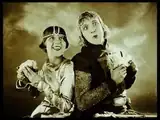
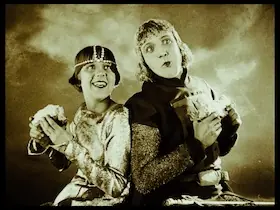
The Roaring Twenties - Silent Film, Revue, Avant-garde
The 1920s were a remarkably fertile decade for music - and cinema was experiencing its first golden age. Before sound film displaced the silent era, live ensemble accompaniment was standard practice. "L'horloge magique" ("The Magic Clock") and "La forêt enchantée" ("The Enchanted Forest") by Władysław Starewicz hold a special place in the film production of that era: Starewicz was a pioneer of puppet animation, particularly stop-motion technique. Both films rank among his finest works and are paired with music by Paul Dessau.
Dessau served as Kapellmeister in Mainz from 1923 to 1925. The arranged and reconstructed version of the film score - for clarinet, violin, cello, double bass, accordion and percussion - was prepared by Mainz-based composer and arranger Bernd Thewes.
The avant-garde strand of the evening includes Paul Hindemith's Kammermusik op. 24 No. 1 for twelve musicians. The piece premiered in 1922 at the Donaueschingen Music Days and caused a scandal that earned Hindemith the reputation of a "bourgeois provocateur". The critic Heuß described the music in 1923: "It has been achieved! Modern German music has finally managed to capture contemporary life at its most frivolous and vulgar." Hindemith's work impresses with its driving rhythmic energy, reminiscent of Stravinsky, while the final movement draws on a foxtrot.
Dance music shaped the 1920s even more profoundly than the avant-garde experiments. Bohuslav Martinů incorporated several of its forms into his ballet "La revue de cuisine" (1928) - with a touch of irony, he has a pot, a lid, a whisk, a floor cloth and a broom perform the dances. Martinů adapted the ballet for the concert hall as the "Jazzsuite", scored for violin, cello, clarinet, bassoon, trumpet and piano. Marches, tango and Charleston make up...
Events
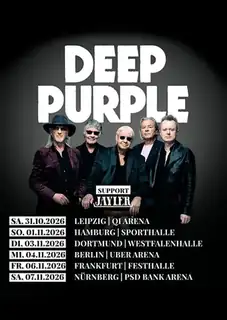 100concertSat 31.10.Deep Purple in Germany 2026
 100concertSun 1.11.Deep Purple - SPLAT! World Tour 2026
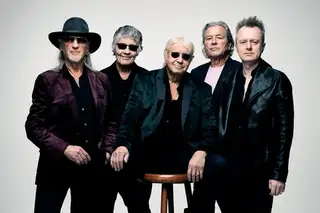 100concertSun 1.11.Deep Purple in Hamburg: MAD IN EUROPE
 95stand-upSun 8.11.Bodo Wartke - Wunderpunkt
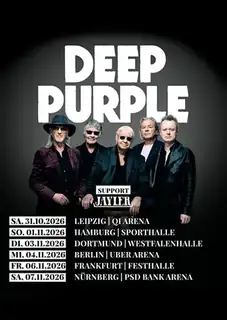 100concertTue 3.11.Deep Purple in Germany 2026
 100concertWed 4.11.Deep Purple - SPLAT! World Tour 2026
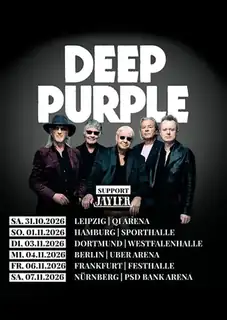 100concertFri 6.11.Deep Purple in Germany 2026
 100concertSat 7.11.Deep Purple - SPLAT! World Tour 2026
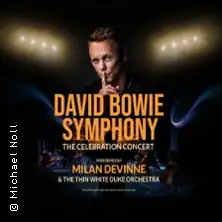 100concertThu 19.11.David Bowie Symphony - The Celebration Concert
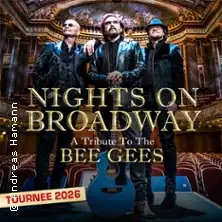 100concertSat 28.11.Nights on Broadway - A Tribute to the Bee Gees performed by Night Fever
 100concertSun 29.11.Tori Kelly - God Must Really Love Me Europe Tour
 100concertThu 17.6.Die Toten Hosen - Trink aus! Wir müssen gehen - Tour 2027