Berlin Women Artists in the "Golden" 1920s
Urania Berlin, Germany

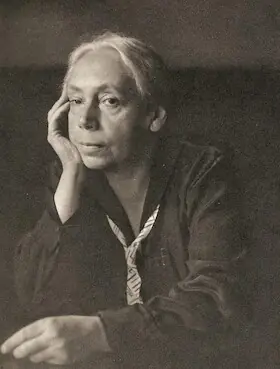
The 1920s in Berlin were far more than an era of cultural flourishing - they were the product of profound social upheaval. Defeat in the First World War, the collapse of the monarchy, and the proclamation of the Weimar Republic in 1918 had shaken the old order and made room for new forces, among them a growing women's movement that was now making itself felt in art and culture.
A central symbol of this shift was women's suffrage in 1918 and the gradual opening of academic institutions to women. From 1919 onwards, women were for the first time permitted to study at the Berlin Academy of Arts - a right previously denied to them, which had forced many into artistic exile or into private art schools. Jeanne Mammen had studied at the Brussels Academy, Hannah Höch had taken the route through the Berlin Kunstgewerbeschule. Lotte Laserstein belonged to the pioneering generation that benefited directly from this opening - and found female role models in teaching positions at the Academy in Käthe Kollwitz and, later, Renée Sintenis.
These artists created their work in a city torn between inflation and modernisation, between political radicalisation and cultural explosion. How directly this tension fed into their art is explored in the exhibition "Ruin und Rausch" at the Neue Nationalgalerie.
Art historian Thomas R. Hoffmann brings the works of Mammen, Höch, Laserstein, Kollwitz, and Sintenis into dialogue, asking how these women - outsiders in the art world and witnesses to a time of rupture - perceived, interpreted, and shaped their era.
Lectures · Berlin 53 in the next 30 days →
 75lectureFri 30.10.An Evening with Fran Lebowitz
 73lectureSun 15.11.Joschka Fischer: Who Are We? - Germany in Search of Its Identity
 68lectureTue 3.11.Politik mit Anne Will - Podcast Live - 2026
 68lectureSat 19.12.Lydia Benecke - Psychology of Manipulation
 65lectureSat 31.10.Reading with Cordula Stratmann - Where Did I Stop? | moderated by Michael Abdollahi
 63lectureThu 10.12.Mona Ameziane & Christine Westermann - When Did You Know It Would Be Good?
 100concertWed 4.11.Deep Purple - SPLAT! World Tour 2026
 100concertThu 19.11.David Bowie Symphony - The Celebration Concert
 100concertSun 15.11.Little Big - European Tour 2026
 89festivalFri 30.10.SOUND METAPHORS FESTIVAL PART 2
 97concertTue 27.10.Slayyyter
 97concertFri 30.10.Joe Bonamassa