Museum Tickets - Cap San Diego
Cap San Diego, Hamburg, Germany
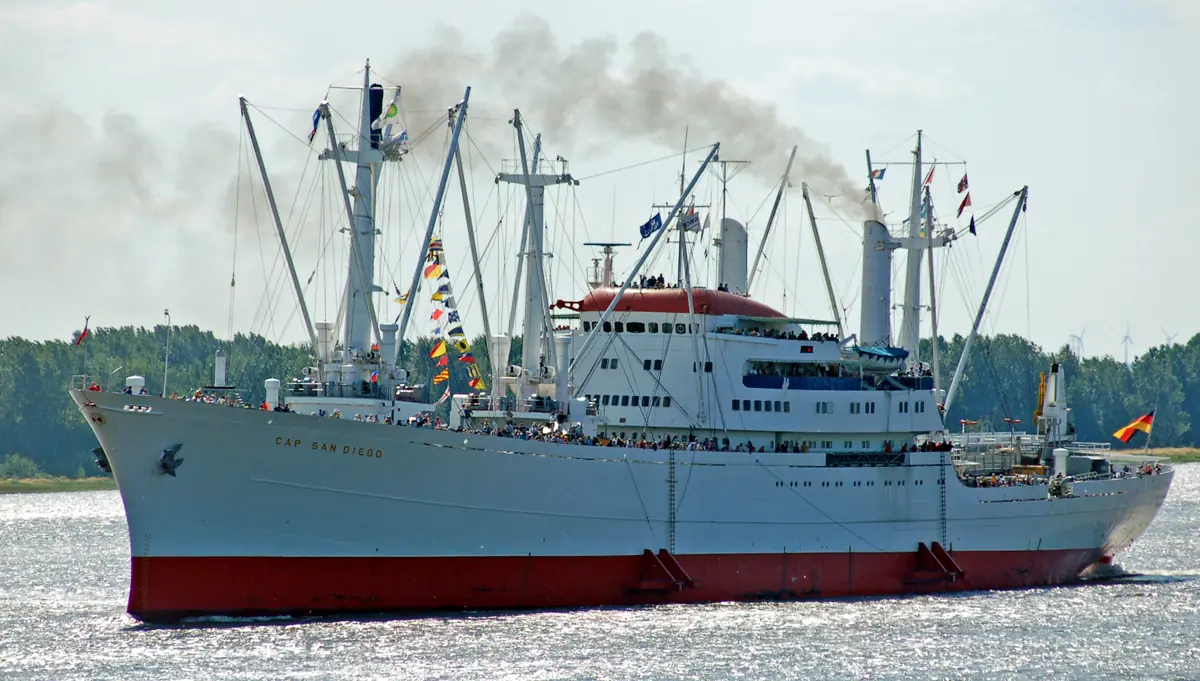
Foto: Huhu Uet · CC BY 3.0
The "Cap San Diego" was commissioned in 1962 - as the last of six identical general cargo ships that operated on regular routes between Europe and South America. Southbound, she carried machinery, technical and chemical products; on the return journey, raw coffee, cocoa, beef, fruit in refrigerated holds, and edible oils in heated tanks. The "Cap San Diego" never carried bananas.
The ship was ordered by the Hamburg-based shipping company Hamburg Süd, which belonged to the Dr. Oetker conglomerate at the time. All ships of this class bore geographical names "Kap San ..." or "Capo San ..."; this vessel is named after the western tip of Tierra del Fuego. It was built at the German Shipyard in Hamburg-Finkenwerder, where the Airbus factory stands today.
Before containerization, cargo was loaded loose in crates, sacks, or barrels. The ship features large cargo holds, masts with cargo booms, and two mobile cranes. The freighter could carry up to 10,000 tons of cargo - a quantity that took around seven days to load in general cargo operations. Today, container ships move the same amount in a maximum of eight hours. This made the "Cap San Diego" unprofitable within just a few years of entering service; by 1986, it faced scrapping in Asia. The city of Hamburg literally saved the ship at the last moment - today it lies as a museum ship at the Überseebrücke in front of the Elbphilharmonie.
Several times a year, the ship embarks on voyages. All areas on board are accessible, from the bridge to the engine room, and the crew explains the functions of the world's largest seaworthy museum freighter.
Events · Hamburg 614 in the next 30 days →
 36exhibitionThu 5.11.Mit Kunst und Kegel - Bucerius Kunst Forum
 34exhibitionFri 4.12.mineraleHamburg-Schnelsen 2026
 28exhibitionWed 4.11.Zeit-Stiftung - Bucerius Kunst Forum Hamburg
 100concertSun 1.11.Deep Purple - SPLAT! World Tour 2026
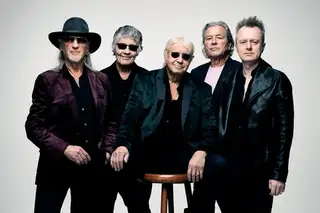 100concertSun 1.11.Deep Purple in Hamburg: MAD IN EUROPE
 100concertSun 29.11.Tori Kelly - God Must Really Love Me Europe Tour
 93musicalSun 7.3.BEAT IT! – The Hit Show About the King of Pop!
 100concertMon 26.10.Little Big - European Tour 2026
 99concertSat 12.12.INNA - Echoes Tour 2026
 97concertSat 7.11.BLUE - 25TH ANNIVERSARY TOUR
 95concertMon 30.11.Boombox live in Hamburg
 94concertMon 26.10.PLACEBO - 30TH ANNIVERSARY TOUR