Appropriation and Resurrection
Martin-Luther-Kirche Dresden, Germany
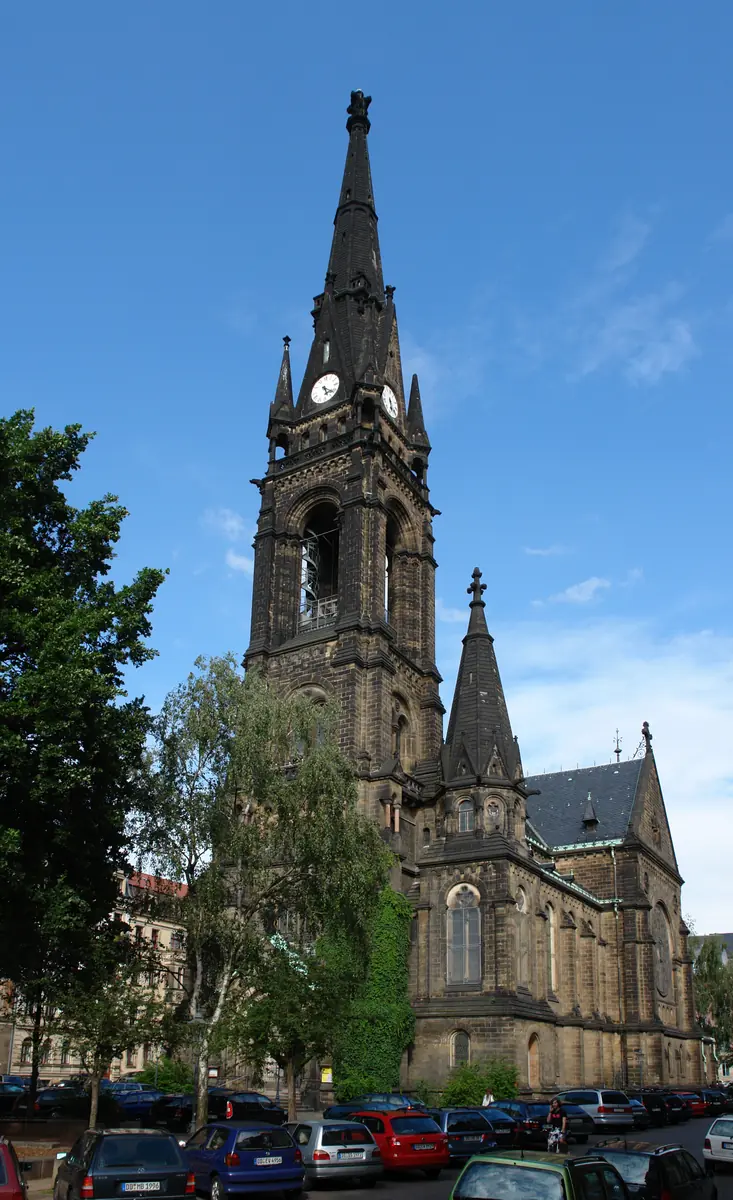
Foto: User:Kolossos · CC BY-SA 3.0
RENAISSANCE III | Arrangements of the Schütz Passions by Carl Riedel (1870) and works by Johannes Brahms and Arnold Mendelssohn
18.30 | A Word of Introduction… Prof. Dr. Walter Werbeck
Prelude to the concert "Appropriation and Resurrection"
When Carl Riedel performed works by Schütz in Leipzig in 1857, he captivated the audience with 350 singers, an orchestra of fifty musicians, and a grand organ - the Thomaskirche trembled. His pasticcio "The History of the Passion and Death of Our Lord Jesus Christ" drew from three Passions by Heinrich Schütz and one by Marco Giuseppe Peranda, which in Riedel's time was still considered a work by Schütz.
With the rise of the early music movement, this mode of appropriating tradition fell into disrepute: too much period taste obscured the historical heritage, critics argued. Yet the rediscovery of "Old Music" would scarcely be conceivable without these early attempts - and without the collecting and editorial passion of the second half of the 19th century, driven by historicism, many manuscripts of music before 1750 would have been irretrievably lost.
The Gewandhaus Choir places Riedel's early testimony to the Schütz renaissance in context with works by Johannes Brahms and Arnold Mendelssohn, both of whom participated with compositional curiosity in the "rediscovery" of "Old Music".
Classical · Dresden 14 in the next 30 days →
 75classicalSun 8.11.Vivaldi - The Four Seasons - Berlin Chamber Soloists
 72classicalSun 29.11.Scheherazade | Aziz Shokhakimov, Matilda Lloyd, Dresdner Philharmonie
 72classicalSat 6.3.Also sprach Zarathustra | Vasily Petrenko, Julia Fischer, Dresdner Philharmonie
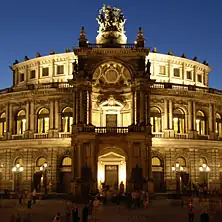 72classicalWed 14.4.Beethoven Concerts - Semperoper Dresden
 72classicalSat 15.5.Hayato Sumino - Cateen | Dresdner Philharmonie
 70classicalFri 22.1.Dvořák - From the New World | Sir Donald Runnicles, Kian Soltani, Dresdner Philharmonie
 96concertTue 10.11.Rammstein Symphonic Tribute - Herzfeuer
 95stand-upSun 8.11.Bodo Wartke - Wunderpunkt
 94concertTue 27.10.Adele - The Show from London
 94concertTue 17.11.Ultimate Eagles
 93musicalWed 14.4.Massachusetts - Bee Gees Musical - Tour 2027
 87clubSat 14.11.DJ Hell & Lars Eidinger