Schleifen
Literaturhaus Hamburg, Germany
25 €

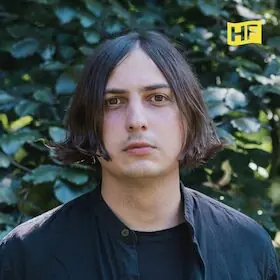
Reading and moderated discussion - in cooperation with Literaturhaus Hamburg.
Elias Hirschl, thirty-two years old, born in Vienna, is a musician, slam poet, and author of literature, theatre, and radio. In recent years, critical acclaim has followed him, and at the Bachmannpreis 2022 he won the audience award. His new novel "Schleifen" has only heightened this attention.
The book tells the story of Franziska, who as a child suffers from a mysterious illness: every symptom she hears or reads about, she immediately develops herself - a single word is enough, and her body reacts. With a young mathematician, she discovers that words from dead languages can protect her. This leads to a shared project: the search for a language that is unambiguous, does not harm, does not spiral out of control. In the background stand the Vienna Circle, mathematics, philosophy of language, and the political ruptures of the twentieth century.
Hirschl combines historical material and invention in a sophisticated way - with the seemingly incredible often proving true and the rest, as critics have noted, "extremely well invented". Clemens J. Setz called "Schleifen" a "great novel of ideas by one of the most blessed contemporary authors". The FAZ praised its "unbridled witty intelligence" and "a fireworks display of fresh ideas", Süddeutsche Zeitung found at least two thousand original ideas across four hundred pages, and the NZZ spoke of a "marvel of confusion".
Lectures · Hamburg 49 in the next 30 days →
 67lectureMon 7.12.Michael Tsokos | Phenomenon Forensics - Fascination with Forensic Medicine 2.0
 65lectureSun 22.11.Lydia Benecke - Criminal Psychology of Serial Murder
 63lectureMon 21.9.Markus Lanz - Greenland - My Journeys to the End of the World
 61lectureFri 25.9."Who Are We? Germany in Search of Its Identity"
 61lectureSun 20.12.Ferdinand von Schirach - The Silent Friend
 58lectureSun 8.11.Georg Elser Reading - Jens Harzer Reads the Interrogation Protocol
 100concertSun 1.11.Deep Purple - SPLAT! World Tour 2026
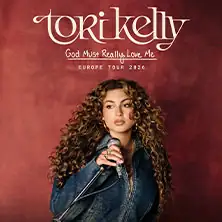 100concertSun 29.11.Tori Kelly - God Must Really Love Me Europe Tour
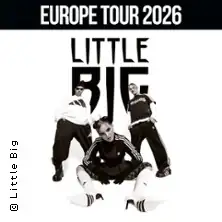 100concertMon 26.10.Little Big - European Tour 2026
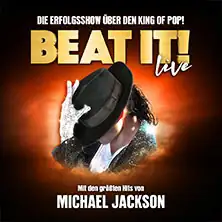 93musicalSun 7.3.BEAT IT! – The Hit Show About the King of Pop!
 99concertSat 12.12.INNA - Echoes Tour 2026
 98concertMon 12.10.Cat Power - The Greatest 20th Anniversary Tour 2026