Taiwan Travelogue
St. Pauli Kirche Hamburg, Germany


Winner of the International Booker Prize 2026
"Literature cannot in any way free itself from politics," said Taiwanese author Yang Shuang-zi at the award ceremony at Tate Modern in London, where she received this year's International Booker Prize for the English translation of her novel "Taiwan Travelogue".
The novel is set in occupied Taiwan during the 1930s and tells the love story between a Japanese author and her Taiwanese translator as they travel together through the country. At first glance, Yang Shuang-zi describes in poetic, artful language a romantic journey in which both women discover the beauty and culinary diversity of the then Japanese-occupied land. Only upon closer reading does the literary sophistication become apparent: it is the constraints of unequal power relations and colonialism that separate the lovers - politics intrudes into the most intimate sphere. What does it really mean to taste foreign food? And what happens to a relationship when the external dynamics of power relations subtly permeate the conversations of both women?
Disguised as a translation of a rediscovered text by a Japanese author, the novel brings to light a long-neglected chapter of East Asian history - in Taiwan it was a sensational success.
Yang Shuang-zi (born 1984) is a writer, essayist, and literary critic. "Yang Shuang-zi" is her pen name meaning "twins" - a reference to her deceased twin sister, with whom she originally shared it.
Lectures · Hamburg 33 in the next 30 days →
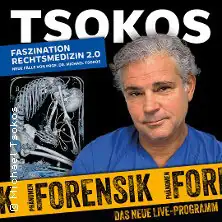 67lectureMon 7.12.Michael Tsokos | Phenomenon Forensics - Fascination with Forensic Medicine 2.0
 65lectureSun 22.11.Lydia Benecke - Criminal Psychology of Serial Murder
 61lectureSun 20.12.Ferdinand von Schirach - The Silent Friend
 58lectureSun 8.11.Georg Elser Reading - Jens Harzer Reads the Interrogation Protocol
 57lectureTue 8.12.Psychologie to go! LIVE - with Franca Cerutti and Christian Weiss
 54lectureSat 31.10."Josse" - Children's Book Premiere
 100concertSun 1.11.Deep Purple - SPLAT! World Tour 2026
 100concertSun 1.11.Deep Purple in Hamburg: MAD IN EUROPE
 100concertSun 29.11.Tori Kelly - God Must Really Love Me Europe Tour
 93musicalSun 7.3.BEAT IT! – The Hit Show About the King of Pop!
 100concertMon 26.10.Little Big - European Tour 2026
 99concertSat 12.12.INNA - Echoes Tour 2026