Bad Schmiedeberger Meisterkonzerte - Genius Mozart
Kurhaus Bad Schmiedeberg, Germany
Concert introduction\n\nFrank-Immo Zichner performs four piano sonatas by Wolfgang Amadeus Mozart: KV 310, 330, 332 and 333.\n\nThe programme traces a wide emotional arc - from the dark A minor Sonata KV 310 to the bright, operatically luminous sonatas KV 330, 332 and 333. In between, a panorama of Mozart's Viennese piano style unfolds: elegant, singing, virtuosic and deeply human all at once. Mozart's piano sonatas were not written for grand concert halls but for the private salon. That is precisely why they so often feel immediate: they speak not in monuments but in personal terms - and yet carry within them the dramatic force that Beethoven would later take further.\n\nSonata in A minor KV 310 - passion and upheaval\nThe Sonata KV 310 holds a singular place among Mozart's piano sonatas. It was written in 1778 during Mozart's stay in Paris - a time of acute personal crisis, when his mother Anna Maria Mozart died and many of his professional hopes collapsed. The opening movement begins with unusual sharpness and restlessness: no courtly elegance, but nervous energy, hard accents and an almost tragic tone. A minor is often Mozart's key of existential agitation - think of the great C minor Sonata KV 457 or scenes from "Don Giovanni". The slow movement initially sounds consoling, yet painful dissonances keep breaking through; in the finale Mozart drives the music into a breathless Presto where virtuosity serves not brilliance but inner tension.\n\nSonata in C major KV 330 - song without weight\nThe C major Sonata KV 330 reads as a counterpart to the dark A minor. It was probably written in 1783 in Vienna or Salzburg and published together with KV 331 and 332. The first movement lives on cantabile lightness - Mozart treats the piano like an operatic stage, with questions, answers and surprising turns. The Andante cantabile is music...
Events
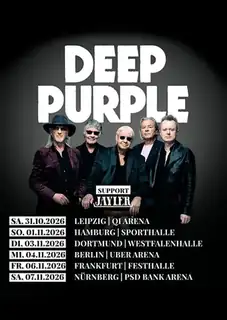 100concertSat 31.10.Deep Purple in Germany 2026
 100concertSun 1.11.Deep Purple - SPLAT! World Tour 2026
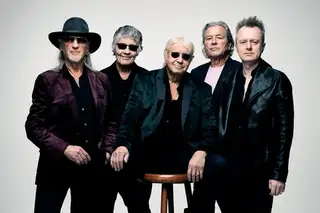 100concertSun 1.11.Deep Purple in Hamburg: MAD IN EUROPE
 95stand-upSun 8.11.Bodo Wartke - Wunderpunkt
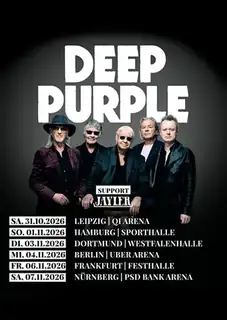 100concertTue 3.11.Deep Purple in Germany 2026
 100concertWed 4.11.Deep Purple - SPLAT! World Tour 2026
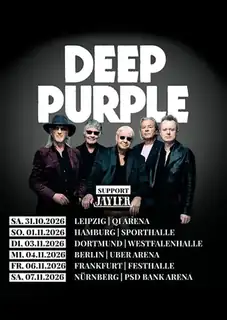 100concertFri 6.11.Deep Purple in Germany 2026
 100concertSat 7.11.Deep Purple - SPLAT! World Tour 2026
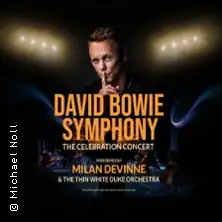 100concertThu 19.11.David Bowie Symphony - The Celebration Concert
 100concertSat 28.11.Nights on Broadway - A Tribute to the Bee Gees performed by Night Fever
 100concertSun 29.11.Tori Kelly - God Must Really Love Me Europe Tour
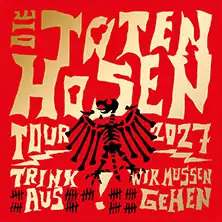 100concertThu 17.6.Die Toten Hosen - Trink aus! Wir müssen gehen - Tour 2027